Login
Register


Member Insights
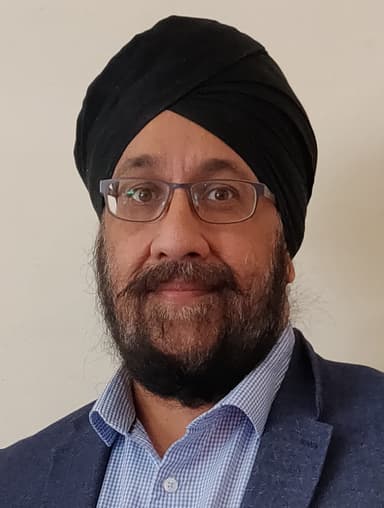
Hari Bakhshi, Telco Product Manager at Kraken Technologies Ltd, discusses how platforms that enforce meaning and rules can simplify operating models and support clearer ownership and decision‑making.
 Hari Bakhshi, Kraken Technologies Ltd
When platforms start deciding
In a previous article, we explored what telecoms could learn from the energy sector about platform innovation, and why systems proven in utilities might matter more to telecoms than bespoke industry tooling. This piece picks up from there, focusing less on where platforms come from and more on what happens when they begin to carry more authority in day-to-day work. The important decisions still belong with people. The platform simply takes on the mundane housekeeping: enforcing rules, maintaining state, and handling routine cases so humans can focus on judgement where it actually matters.
By “authority”, we do not mean removing human judgement. The important decisions still belong with people. We mean a platform that can reliably hold the guardrails: enforcing shared meaning, applying rules consistently, and keeping lifecycle state coherent so routine cases do not need a person to interpret what is allowed.
When organisations talk about transformation, they usually focus on what has been changed: new structures, new systems, and newly described operating models, with progress tracked through milestones, delivery plans, and governance artefacts. From the outside, this activity is taken as evidence that change is happening.
What that activity often fails to show is whether the organisation itself has changed. Systems can be replaced, teams reorganised, and processes rewritten while day-to-day decisions still move in exactly the same way they always did. The organisation looks busy, but the work remains heavy.
The real signal arrives later, as new habits. Work starts to move with fewer checks. Fewer people are pulled in to confirm whether something is safe to proceed. Decisions land where you would expect them to land. To the customer, nothing is announced and nothing looks “transformed”, even as the shape of the work quietly changes.
Telecoms makes this visible because the work is full of edges where systems often disagree on meaning. Eligibility, lifecycle state, and exceptions become a daily reconciliation exercise, just to confirm what is allowed to happen next.
When the platform can resolve those routine questions consistently, people stop acting as interpreters and start acting as owners. The absence of drama is the signal.
In most organisations, the operating model is treated as something that has to be designed. There is an assumption that without deliberate structure work will drift, responsibilities will blur, and risk will be harder to contain. As a result, operating models are planned carefully. Org charts are drawn. Roles are defined. Responsibilities are split and handed off. Processes are put in place to move work from one team to the next in the right order and with the right approvals. Over time, this structure hardens and becomes the way work is done.
Telecoms makes this tendency particularly visible. The work spans customers, products, networks, partners, and regulators, each with their own constraints and failure modes. Teams specialise early because the surface area is too wide for any one group to hold comfortably. Boundaries multiply. Handoffs become formal. Escalations are normalised. None of this happens because telecoms enjoy complexity. It happens because the organisation has to absorb uncertainty somewhere, and the operating model becomes the place where it ends up.
What is often missed is that much of this structure is not there to organise work efficiently. It exists to manage doubt. When systems cannot be trusted to agree on meaning, people step in to reconcile them. When rules are ambiguous, roles appear to interpret them. When lifecycle state is unclear, back offices form to contain the risk. The operating model grows not as an expression of intent, but as a set of compensations layered on top of a platform that does not quite decide.
Kraken approaches this differently. Its operating model is not layered on top of the platform as a corrective. It follows directly from what the platform is allowed to do. The platform holds the guardrails wherever they can be held safely: product rules, lifecycle state, and the checks that stop work drifting into unsafe territory. That does not reduce people’s agency. It amplifies it. With the housekeeping handled by the system, teams can act with confidence and fix real problems end-to-end, with fewer scripts, fewer handoffs, and fewer special permissions.
If you watch how work actually gets done in a large telecom operation, a familiar pattern appears. Experienced staff do not simply follow process. They interpret and check as they go. They decide whether something is safe to move forward, whether a rule really applies in a given case, and whether two systems that disagree can be trusted enough to proceed. Much of this judgement is never written down. It lives in habit, memory, and experience, passed on informally and reinforced over time.
This is often described as expertise, and it is. It is also work the platform could be doing for itself.
As reliance on that judgement grows, the operating model grows around it. Roles narrow to manage risk. Back offices appear to contain uncertainty. Escalations formalise decisions that never quite found a home in the system. The structure looks deliberate, but in practice it is compensating. The organisation is doing extra work simply to allow other work to proceed safely.
None of this is a failure of people. It is a rational response to platforms that capture what happened but do not carry enough meaning to let the organisation act safely at speed. When rules and state are not enforced in the system, someone has to enforce them in practice. That work lands with experienced staff, and then gets formalised into approvals, handoffs, and back offices. Over time, the operating model hardens around that gap, not because leaders prefer bureaucracy, but because it is the only way to keep decisions safe and consistent.
There is another way this can look.
Where the platform decides what is true and what is allowed to happen next, the operating model becomes lighter without becoming naïve. Routine decisions are handled routinely because the system already knows how to apply the rules. That creates the conditions for end-to-end ownership: leaders can trust teams with broader authority because the guardrails are in place, and teams can act confidently because the state and rules are consistent. Specialisation still exists, but it exists where it adds value rather than where it exists to contain doubt.
The organisation still has structure, but it no longer carries the same load. Work moves without constant checking. Fewer handoffs are needed because fewer decisions are deferred. People spend more time resolving genuine issues and less time reconciling information that should never have conflicted in the first place. The operating model shifts from compensating for gaps to organising work.
This is not about removing people from decisions. It is about removing decisions that never needed to be human. When the platform can enforce product rules, manage lifecycle state, and mediate external inputs consistently, people are freed to focus on judgement where judgement actually matters.
The difference lies in what the platform is allowed to do.
When systems record activity without enforcing meaning, operating models are forced to carry the burden of interpretation. People become the glue that holds things together. When platforms enforce product constraints, own state, and decide how external behaviour is interpreted, that burden shifts back into the system and authority becomes explicit.
Fragmentation does not disappear. Systems may still be composed of multiple parts. Integration still exists. Change still has cost. What changes is the influence fragmentation has over how work is organised. When systems agree on meaning, the operating model no longer exists to reconcile contradictions. It can instead focus on serving customers.
This is why platform design and operating model design cannot be separated, because one determines the other.
What this ultimately changes is not how organisations look, but how they behave. When platforms carry authority, work stops searching for permission and starts moving with intent. Operating models become simpler not because they have been redesigned, but because they are no longer compensating for uncertainty. Nothing dramatic happens. Nothing needs to. The organisation simply stops working against itself.
This is how “better service” and “lower cost” stop being trade-offs. When the platform carries authority, customers see fewer errors and faster outcomes, while the organisation does less checking to stay safe. It is part of why our very large clients can drive both industry-leading customer satisfaction and among the lowest cost-to-serve at scale.